September 1st - 7th
On 1st September…
1159 - Pope Adrian IV, the 170th pope died. He was the only Englishman ever to hold the office of Pope. His real name was Nicholas Breakspear, and he was born near St Albans in Hertfordshire.
1967 - Siegfried Sassoon, a famous war poet of World War I, died aged 80.
1939 - World War II started when Germany invaded Poland.
On 2nd September…
1666 - The Great Fire of London broke out at a bakery in Pudding Lane. The fire lasted for five days and destroyed a third of the city. About 100,000 people were made homeless. Samuel Pepys, the diarist, wrote about the great fire in his diary and describes how he took his money and belongings to safety in the middle of the night. The Monument, a memorial built to commemorate the Great Fire, was designed by Sir Christopher Wren and Dr Robert Hooke. It still stands just metres away from where the fire began and its 311 steps can be climbed to see panoramic views of London.
1945 - Japan formally surrendered on board the USS Missouri, an American battleship, moored in Tokyo Bay. Their formal surrender brought an end to World War II.
On 3rd September…
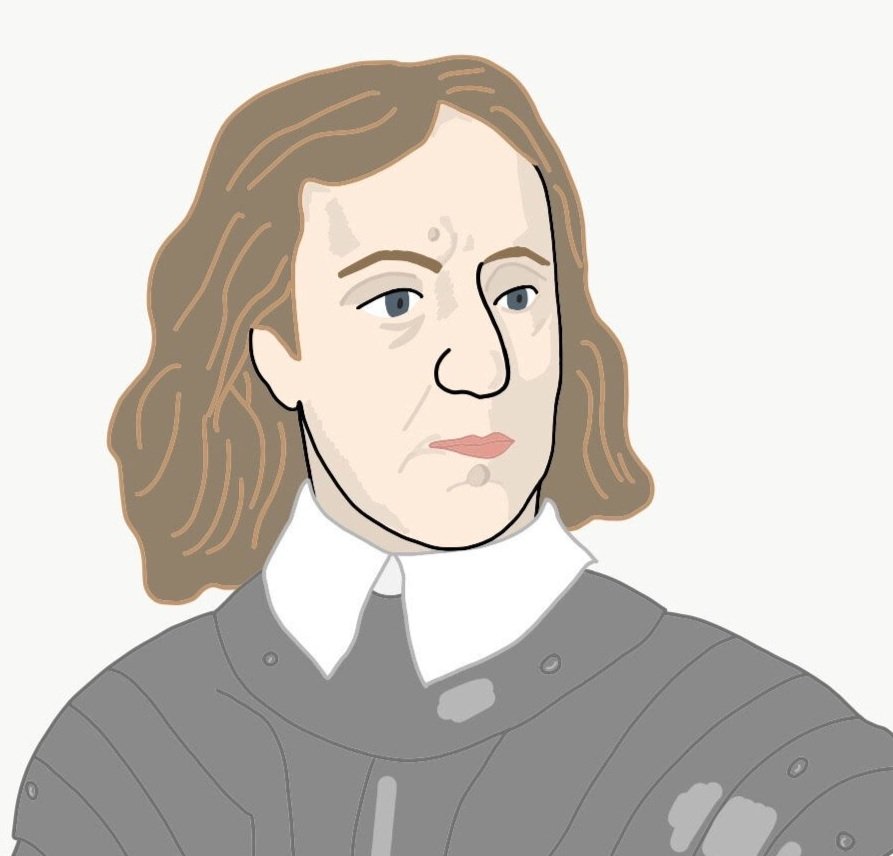
A busy day for Oliver Cromwell
1650 - English forces defeated Scottish forces at the Battle of Dunbar. King Charles I had been beheaded in 1649 and Oliver Cromwell was now Lord Protector of England, whilst England accepted Cromwell as their leader, the other countries under England’s rule refused to accept Cromwell as their leader. Instead they acknowledged King Charles II (the late King Charles I’s son) as their rightful ruler. The Battle of Dunbar was fought between English forces led by Cromwell and Scottish forces led by David Leslie in an attempt to bring Scotland under English rule. The Scottish defeat saw Scotland under English occupation and rule for ten years.
1651 - Battle of Worcester between Oliver Cromwell’s forces and English royalists. Despite Cromwell’s win at the Battle of Dunbar in 1650, there was still unrest in Scotland. A Scottish army led by (the uncrowned) King Charles II, marched through England to meet Cromwell and reclaim the English throne. Cromwell had anticipated the attack and ordered four armies to meet the Scottish royalists. Cromwell’s armies won and King Charles II was forced to flee to safety and exile in France.
1658 - Oliver Cromwell died. He led parliamentary forces during the English Civil War and was made Lord Protector of England, Scotland, and Ireland after the beheading of King Charles I.
1783 - Great Britain and America signed the Treaty of Paris (in Paris, France) officially recognising the United States of America as independent from Britain.
1878 - A paddle steamboat called ‘The Princess Alice’ collided with a much larger collier (a coal-carrying ship) on the River Thames, killing about 650 people. The Princess Alice was carrying families returning from a day out at the coast of Sheerness when it was sliced in two by the collier. Over the following days and weeks dead bodies washed up onto the banks of the Thames; bodies of the people drowned by the weight of their Victorian fashions, people overcome by the raw sewage being pumped into the Thames, and people unable to swim. Improvements to sewage works, emergency signalling lights on boats across the globe, and the building of the Royal Albert Dock which separated heavy goods traffic from smaller boats were all implemented in the aftermath of the tragedy.
1945 - Britain and France declared war on Germany following its invasion of Poland at the beginning of World War II.
On 4th September…
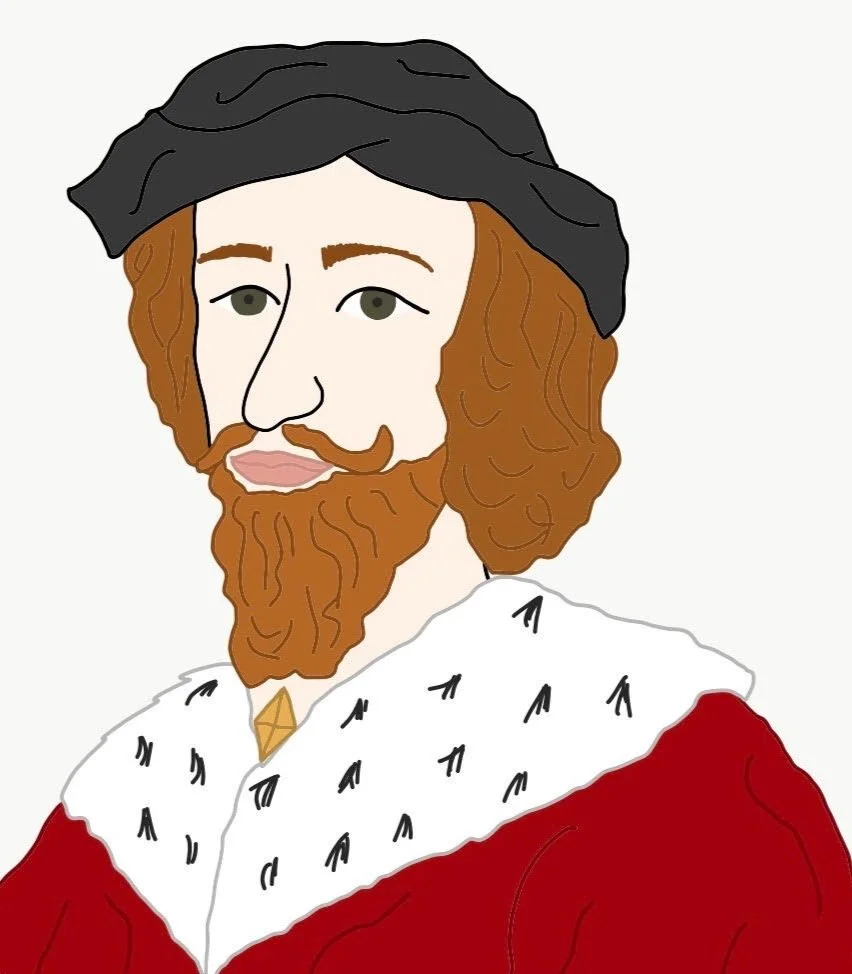
King Alexander III was born
1241 - King Alexander III was born in Roxburgh Castle, Scotland. He became king when he was only seven years old and had a very eventful reign. He married Princess Margaret, daughter of King Henry III of England, when he was only ten years old. He gained control of the Western Isles and the Isle of Man, taking them back from Norway. Sadly, his wife and children all died before him, so when he died he left no direct heir to the throne. His closest relative was his three-year-old granddaughter, Margaret the Maid of Norway. His death followed by the early death of his granddaughter left Scotland without a monarch, this eventually led to the Wars of Independence with England.
1571 - Matthew Stewart, the Earl of Lennox, regent of Scotland was killed. At the time of his death, he was ruling Scotland in his grandson’s name, King James VI of Scotland, and at the same time was seeking justice for his own son’s murder. Matthew’s son was Lord Darnley, husband of Mary Queen of Scots and father of King James VI. Matthew Stewart was a main witness against Mary Queen of Scots in the case for his son’s murder as he believed Mary had ordered the murder of Lord Darnley. Matthew Stewart was shot in a fight between his men and the queen’s men at Stirling. Whether his death was an accident or not remains a mystery.
1588 - Robert Dudley, the Earl of Leicester, one of Queen Elizabeth I’s favourites died. Elizabeth made him Master of the Horse, Privy Councillor, and Knight of the Garter. It was rumoured that he murdered his wife so that he could marry Queen Elizabeth but as well all know Elizabeth I never married.
On 5th September…

Last wife of Henry VIII died
1548 - Catherine Parr, 6th wife of Henry VIII died. Catherine had survived Henry after his death and went on to marry her fourth husband, Thomas Seymour. She became pregnant with her first child with Thomas but died shortly after giving birth to a daughter.
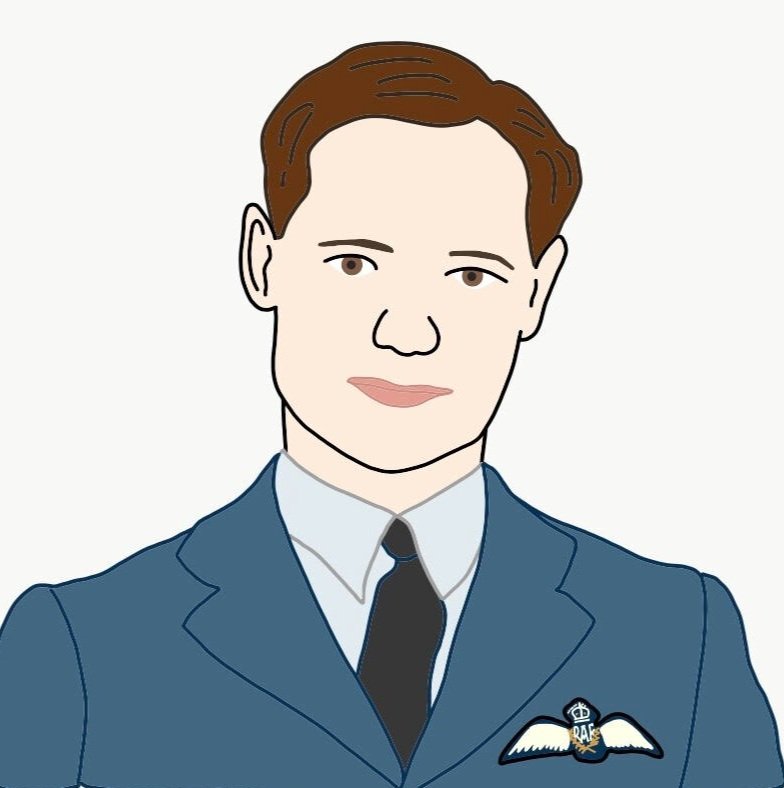
Fighter pilot and amputee Douglas Bader died
1982 - Douglas Bader, the famous RAF fighter pilot died. Bader’s legs were amputated following an aircraft crash near Reading in 1931. Despite demonstrating that he could meet the RAF’s physical requirements on his new artificial legs he was discharged from the Air Force in 1933. At the outbreak of World War II, he undertook a refresher course for the RAF and became a fighter pilot. In 1941 he was shot down over German territory and taken as a prisoner of war. After attempting to escape, he was taken to Colditz Castle, a prisoner of war camp which was supposed to be escape-proof.
Douglas Bader left the RAF after the war and in his spare time he encouraged people who had lost limbs, often writing inspiring letters or giving unexpected visits to new amputees. He was awarded a CBE in 1956 and a knighthood in 1976 for his services for the disabled. The Douglas Bader Foundation exists to advance and promote the welfare both physical, spiritual, and mental, of persons without one or more limbs.
1997 - Mother Teresa died. Her life had been devoted to the caring of the sick and the poor, especially in India. She was born in Macedonia to Albanian parents and became a nun and promoter of peace, winning the Nobel Peace Prize for her work. Mother Teresa founded the Order of Missionaries of Charity which is dedicated to the poor people of India.
On 6th September…
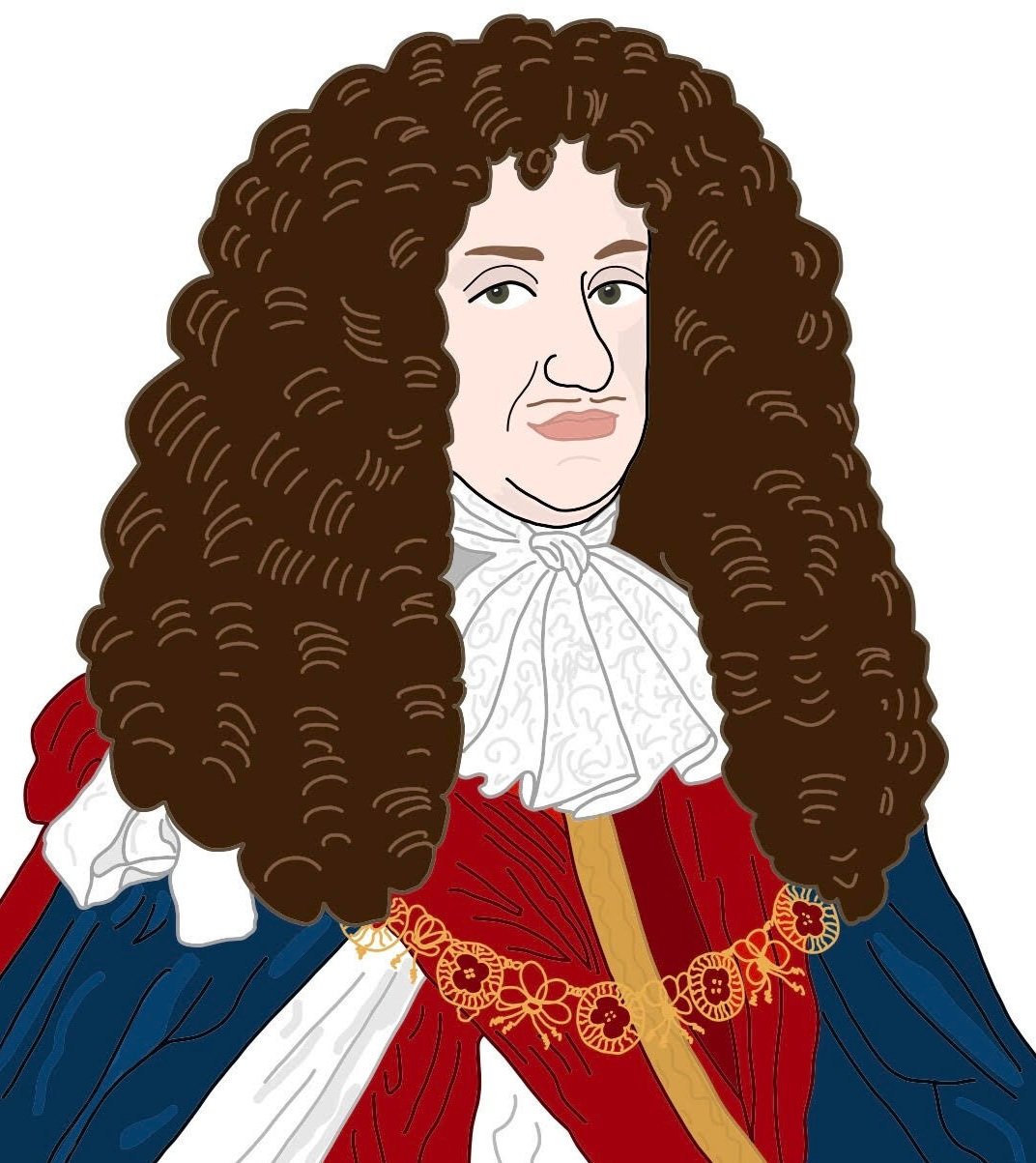
King Charles II hid in an oak tree
1651 - King Charles II hid in an oak tree to escape from Roundheads (Parliamentarians) after losing at the Battle of Worcester. Charles II had been on the run for three days. When night came, the king climbed down from the tree, and hid in a priest hole of Boscobel House overnight before making his way towards Bristol and then France in the October. (A priest hole is a hiding place made for Catholic priests to hide in during times of Catholic persecution.)
1666 - The Great Fire of London died down leaving 13,200 houses destroyed, 80,000 people homeless, and only six people reported dead. The fire was stopped in its tracks by the blowing up of houses in its path to create a firebreak. The number of deaths may have been much higher, but we will never know because lives of the poor were not considered to be important and were therefore not recorded. It is reported that King Charles II even joined in the efforts to put the fire out.
On 7th September…
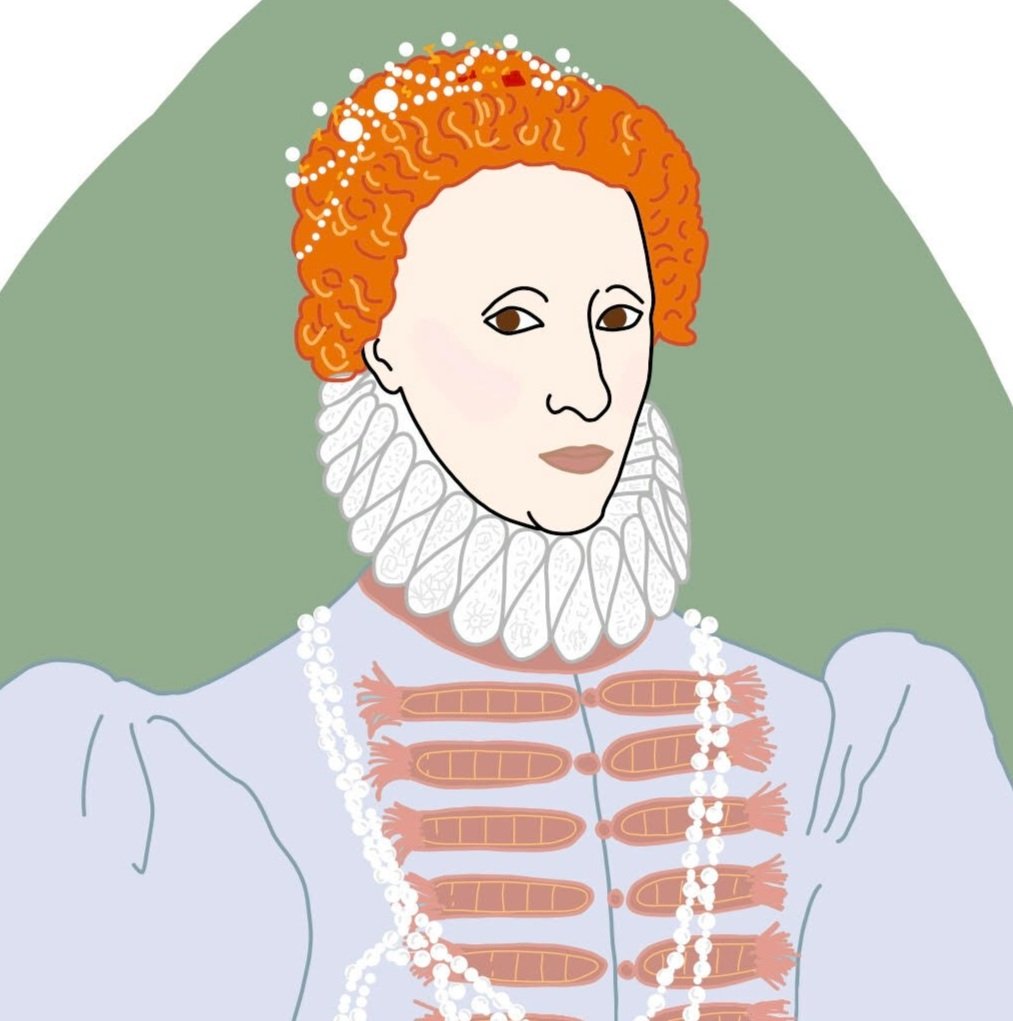
Another daughter for Henry VIII
1533 - Queen Elizabeth I was born in Greenwich, London. Her parents were Henry VIII and Anne Boleyn. Despite being female, she became one of the most powerful monarchs of her time. She never married and was nicknamed the Virgin Queen because she never had any children. Elizabeth I was the last of the Tudor monarchs and the time of her reign has become known as the Elizabethan Age.
1940 - The Blitz began when three hundred German bombers bombed London for the first of 57 consecutive days and nights of air raids during World War II. Nearly 2,000 people were killed or wounded in just the first night of bombing.